
In this brand new monthly report, FPM looks in detail at what the HIW have publicly reported from their GP practice inspections during October 2026, all anonymised. We highlight great performance and innovation picked up in inspections, but also the reasons some practices were told to improve.
What the HIW Penalised For: Poor practice to avoid
-
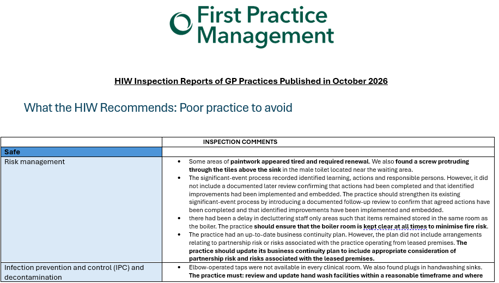
Risk management: one practice was told it should update its business continuity plan to include appropriate consideration of partnership risk and risks associated with the leased premises.
-
Infection prevention and control: A provider was advised they should ensure that waste bins are kept locked; elsewhere providers were advised to review their IPC and needlestick policies to ensure that documented Legionella precautions are in place for all water outlets, including staff shower facilities. Information is available regarding who staff should contact in the event of a needlestick injury for relevant monitoring and support.
-
Medicines Management: one practice did not have a log for boxes of prescription stationery; another stored a urine sample in a vaccine refrigerator; elsewhere the HIW did not see a room thermometer to monitor ambient storage temperatures. The practice should carry out and record ambient room temperature checks to ensure medicines are stored under recommended conditions. Other comments included that a practice had two prescribing policies. One was the current policy, while the other was a comprehensive draft policy. The draft policy had not yet been formally adopted. The practice should formally adopt the draft prescribing policy and ensure it is reviewed and updated as required.
-
Timely care: Inspectors did not see a dedicated feedback or suggestions box; they noted that the number of abandoned calls was high; however, there was uncertainty about whether this data included patients selecting options to request a call back rather than waiting on the line.
-
Effective care: in this category, inspectors did not see a written workflow policy which clearly set out how correspondence should be delegated; and they did not see a formal process to ensure that tests requiring repetition or re booking were monitored to confirm that appointments had been made or that tests had been completed.
-
Communicating and language: inspectors found that no patient information leaflet was available to provide comprehensive information within one easy to view document; they advised that one practice should ensure that the Welsh Language Active Offer is embedded for patients to access services in the Welsh language should they prefer; and that each patient’s preferred language and communication needs were consistently recorded within their medical record.
-
Governance and Leadership: one provider was told to review its policy framework to ensure that all policies and procedures are current, complete, readily accessible and subject to effective document control. This should include the use of version numbers, issue dates and review dates, and the development and adoption of any missing policies, including those relating to patient consent and the Duty of Candour.
Click the image below to download the full report
What the HIW Praised: Good practice to aim for
-
Medicines management: the inspectors found that one practice had a clear and well-structured workflow for managing repeat prescription requests. The process supported the safe and consistent handling of prescriptions and this was identified as noteworthy practice.
-
Safeguarding of children and adults: HIW found that vulnerable adults were clinically coded and flagged within their medical records. The practice had also appointed a lead and deputy lead for named patients receiving palliative care. This supported continuity, oversight and coordination of care and was identified as noteworthy practice.
-
Effective care: noteworthy practices included that once urgent suspected cancer referrals were made, administrative staff checked within two weeks to confirm that patients had been offered an appointment.
-
Communicating and language: HIW saw bilingual signs and posters available in the practice. They also saw staff wearing “Iaith Gwaith” badges to show patients, staff and visitors that they spoke Welsh.

0 Comments