
In this monthly report, FPM looks in detail at what the HIW have publicly reported from their GP practice inspections during November 2026, all anonymised. We highlight great performance and innovation picked up in inspections, but also the reasons some practices were told to improve.
What the HIW Penalised For: Poor practice to avoid
-
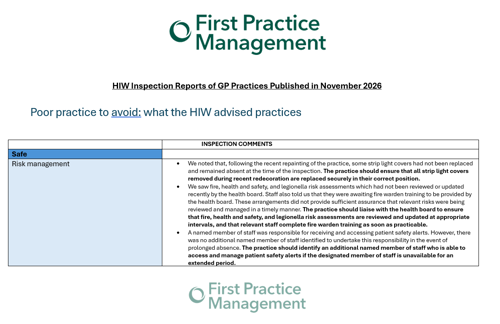
Risk management: In one practice, there was no additional named member of staff identified to undertake this responsibility in the event of prolonged absence. In another, the business continuity plan required updating to include accurate practice specific information, fully assign roles and responsibilities for implementing actions and display comprehensive version control.
-
Infection prevention and control: The HIW advised one practice that their needlestick and sharps policy needed additional practical information to support staff in the event of an incident, including clear reporting arrangements and details of where staff should attend for further assessment and support. Hot water had been turned off for the summer months resulting in hot water running at temperatures too low to effectively prevent the risk of legionella contamination and to enable effective hand washing. Cold water was also at a temperature too high to prevent the risk of legionella contamination.
-
Medicines Management: one practice must ensure that all Patient Group Directions are current, authorised and reviewed within the required timescales. Arrangements should also be implemented to routinely monitor PGD review and expiry dates and ensure expired PGDs are promptly removed from use. Another should obtain paediatric AED pads and store them with the emergency equipment within the practice to ensure they are readily available when required.
-
Communicating and language: the HIW commented that "from our review of eight patient records we could not see that patient’s language preference was routinely recorded to inform forward planning for communication assistance required during appointments." The practice should review the information displayed throughout the premises to ensure that any new patient-facing signs are bi-lingual and that there is an equitable display of posters and other information in both Welsh and English.
-
Governance and Leadership: here the HIW found that some documents, including the Blood Borne Virus Policy and Needlestick/Sharps Policy, did not include effective document control information, such as a version number or review date. Without consistent document control, there was a risk that staff could refer to information that was no longer current. The practice should review its policies and procedures to ensure that they are current, complete and subject to effective document control. This should include the use of version numbers, issue dates and review dates.
Click the image below to download the full report
What the HIW Praised: Good practice to aim for
-
Rights and equality: Staff had undertaken training in equality, diversity and inclusion, together with autism awareness training. This included Paul Ridd Foundation training to promote awareness and understanding of the needs of people with learning disabilities.
-
Dignified and respectful care: Background music in the reception area further helped to maintain confidentiality and reduce the risk of conversations being heard by others. Telephone calls at reception were managed appropriately, with staff only receiving personal information and not disclosing confidential details.
-
Governance and leadership: The HIW registration certificates were prominently displayed, registration requirements were being met and appropriate employer and public liability insurance was in place.
-
Communicating and language: All staff were able to communicate in both Welsh and English, enabling the needs of Welsh-speaking patients to be met effectively. Patients were routinely greeted and supported in Welsh, reflecting the service's commitment to bilingual communication.

0 Comments