

In this monthly report, FPM looks in detail at what the CQC have publicly reported from their GP practice inspections during August 2026, all anonymised. We highlight the reasons some practice's individual ratings were scored Requires Improvement, or Inadequate.
- Please note: no reports were published in Aug for NHS GPs rated Inadequate or Outstanding overall (as of time of writing on 28/8/26)
Click the image below to view the full report:
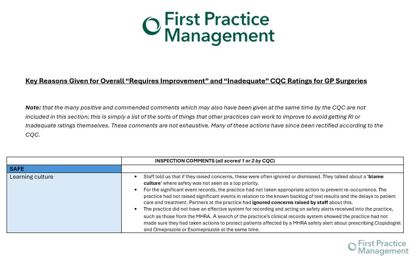
'REQUIRES IMPROVEMENT' overall (individual scores of 1 or 2):
SAFE:
-
Safe environments: Whilst one service was testing its water temperature monthly, records showed the temperatures did not consistently meet the required standards, with some hot and cold-water readings from different outlets outside the expected thresholds. The service also could not provide maintenance records for a wheelchair available for people to use. (Score 1)
- Infection prevention and control: the availability of colour-coded equipment to be used in specific areas to reduce the risk of cross-contamination between clinical and non-clinical areas was not appropriate for the service’s needs. (Score 1). In another practice, out-of-date syringes were found in a doctor's room, some sharps bins were unsigned and undated, and no infection control audits or hand hygiene audits were available for several years prior to 2026. The IPC lead was unable to confirm recent IPC training, and there was limited evidence of ongoing competency development. The IPC policy referred to monthly checks, but supporting records were not available. (Score 2). In another surgery, several clinical rooms had hand wash basins with plugs on chains. This is an IPC risk. The audit stated there were no hand wash basins with plugs.
FPM Core's policy and procedure library contains templates for safe staffing including a Staff Screening & Immunisation Policy, Staff Handbook, and Conflict Resolution Policy - Staff.
EFFECTIVE
-
Assessing needs: at one practice, people felt they treated rudely by the staff, that staff culture was less than positive, and elderly patients were digitally excluded. (Score 2)
-
Consent to care and treatment: We found a DNACPR that did not show the details of the patient it concerned or the clinician who authorised it. This patient was discharged 18 May 2026 and did not have any follow up with the patient completed until 22 June 2026. (Score: 1)
CARING
-
Workforce wellbeing and enablement: During the site visit, we observed that there was no provision made by the leaders to support the staff during the heatwave, there were no portable fans to ease the discomfort experienced by the staff. (Score: 1)
WELL LED
-
Governance, management and sustainability: one service could not demonstrate how it maintained oversight of its water temperature monitoring and the actioning of out of range recordings. The service did not effectively monitor IPC risks and had not considered its branch site when undertaking its IPC audits for the local integrated care board. (Score 1)
- Shared direction and culture: the practice had not clearly identified who was responsible for specific tasks at the practice and to monitor compliance with guidance and regulations. Patient feedback expressed dissatisfaction with the culture and attitude of staff at the practice. Staff we spoke with expressed their concerns about the work ethics and culture at the practice were not according to the practice’s code of conduct. (Score: 1)
Make sure your policies are up to date and read and understood by all staff with FPM Core - the market- leading compliance system for primary care.

0 Comments