In this monthly report, FPM reviews the latest GP practice CQC inspection reports and highlights key inspection findings from June 2026, all anonymised. We highlight some of the behaviours that won practices Outstanding ratings, and the reasons some practices were scored Requires Improvement, or Inadequate. Do you recognise any of the observations the CQC picked up, either good or bad?
'OUTSTANDING' COMMENTS AND PRAISE FROM THE CQC (scores of 4)
EFFECTIVE:
Several Outstanding GP practice examples demonstrated how innovation, partnership working and measurable improvements can positively influence patient outcomes.
-
How staff, teams and services work together: At one practice, the CQC praised examples of proactive joint working including grief and loss counselling, First Contact Mental Health Service, and Ultrasound guided injections. The same practice had undertaken a review and redesign of the internal clinical communication system and created a one-click communications hub within the clinical system.
-
Supporting people to live healthier lives: The CQC saw numerous quality improvement projects in primary care that aimed to reduce health inequalities and improve long-term outcomes for local populations. These included Raising awareness of diabetes (for example, improvements to in-house communication strategies to include personalised diabetes risk numbers, clear explanation of the benefits of prevention and direct links to success stories and programme information) and Increasing the detection of high blood pressure.
-
Monitoring and improving outcomes: Leaders at the practice had recognised the need to increase uptake of vaccination and screening and in May 2025 had implemented a number of projects to address this including: Make every contact count; proactively engaging using behavioural nudge theory scripts; A structured approach to improving childhood immunisation rates; low uptake of pregnancy vaccinations within the population, in response to which they had approached a local charity.
WELL LED:
These CQC Well-led examples highlighted how leadership development, staff engagement and continuous improvement contribute to Outstanding ratings.
-
Capable, compassionate and inclusive leaders: CQC noted evidence of quality improvement activity which clearly considered the needs of all staff. For example, improvements to the internal clinical communication system, implementation of RAPP button (report a positive or a problem) to enable real time feedback from the non-clinical team and participation in the Healthy Practice Programme. Leaders had also introduced an Associate Partner Scheme to support salaried GPs working at the practice to develop into leadership roles.
-
Partnerships and communities: clinicians at the practice created a structured GP placement for paramedics using existing training capacity to develop them safely into more effective primary care clinicians. This was a strong example of primary care leadership and workforce development, making effective use of existing training capacity to enhance patient care.
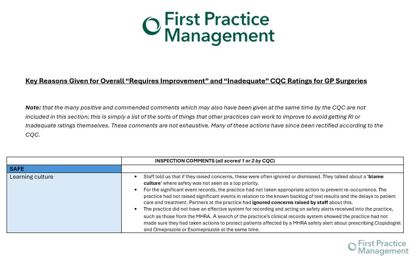
Click the image below to view the full report:
'REQUIRES IMPROVEMENT' / 'INADEQUATE' RATINGS (scores of 1 or 2):
The following findings highlight common weaknesses in GP practice governance, compliance and operational oversight that can negatively affect inspection outcomes.
SAFE:
- Learning Culture: The significant event (SEA) policy had been updated since our previous assessment. It stated the likelihood of the incident recurring would be recorded, but this had not been recorded for any of the significant events we examined. SEAs were recorded on different templates with different levels of detail.
Make sure your policies are up to date and read and understood by all staff with FPM Core - the market- leading compliance system for primary care.
-
Safe systems, pathways and transitions: the practice manager told us that reception staff had and followed a triage sheet to ensure patients were offered the most suitable care option. We asked to see this but none of the 3 members of the reception team knew where it was kept. Also, 1 could not recall if they had ever seen it.
WELL LED
-
Governance, management and sustainability: CQC found a provider had 2 active websites which could cause confusion for patients. They both appeared in search engines, and both included the Provider’s current address, which they moved to in June 2023. This meant some patients may have searched for information and not be aware they were looking at a dated website.

0 Comments